At the doorway, part II
Liverpool's '25-'26 season, the coaching

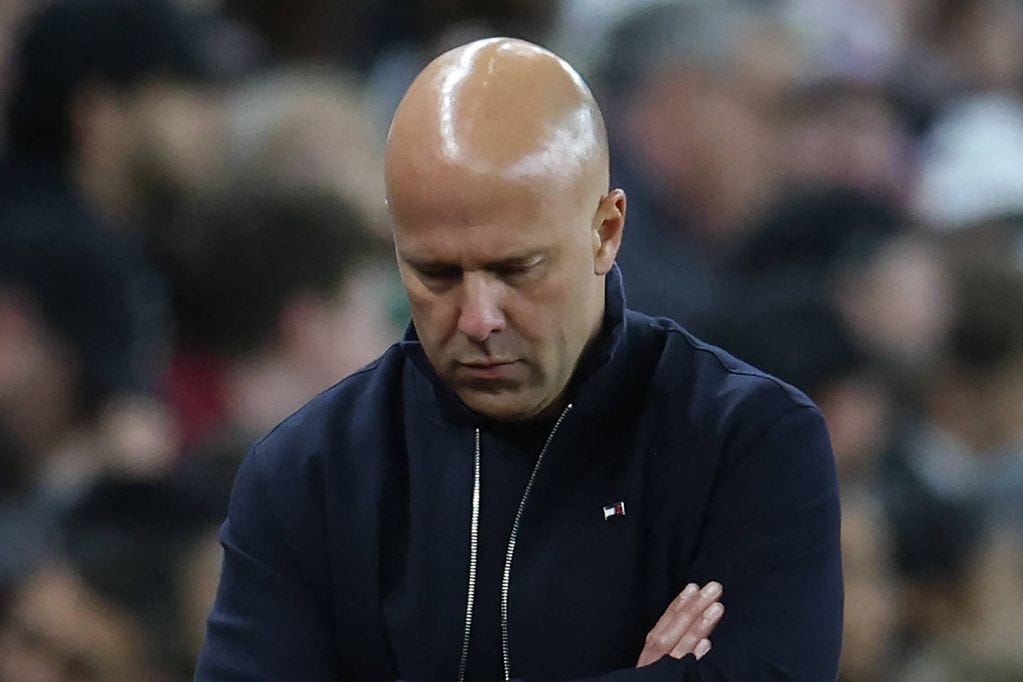
Arne Slot has the misfortune of being in charge in Liverpool’s ‘25-’26 season and the misfortune is being shared by everyone and not just him. I mean, he’s not totally in charge because that’s not the model that FSG wanted for the club, post-Jürgen, and even he wasn’t an autocrat. But he’s the face of what’s happening now, both the successful and the not so much. When it’s working and we’re winning titles, he can do no wrong. When it’s the not so much, there’s no shortage of people calling for him to be the first sacrifice to the football gods in the hopes of more rain (aka wins.) And all of that is perfectly normal in the sports world. The coach being the public face means that he’s going to get the public heat, whether from supporters or pundits or both. It’s to his misfortune that he’s following the most charismatic manager that Liverpool has had since Shankly, but who did have his own failings. Those failings were often covered by the fact that, for most of his tenure, LFC were one of the most exciting clubs in the Premier League to watch, even when they were losing. That’s not the case now, which means that Arne has run into problems with strategy, with style and with relationships, both public and internal.
Strategy
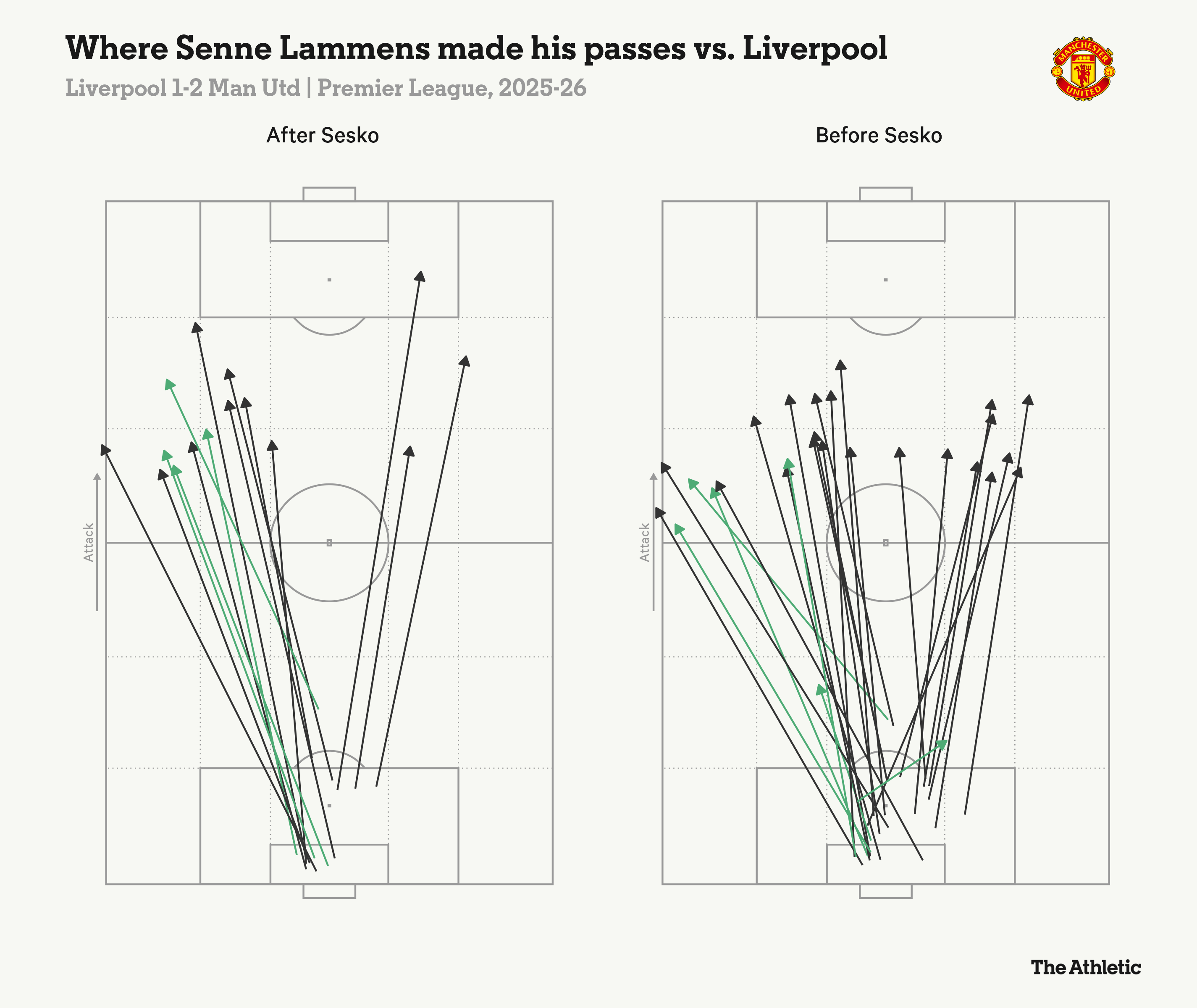
By and large, we don’t seem to have one. That’s an oversimplification, of course, but examining the majority of our games would lead most to that conclusion, which means there’s probably a kernel of truth to it. Arne was hailed in his first season for changing tactics and bringing on substitutes that transformed second halves and rescued wins from what would have been draws or even losses. This season, it seems like he’s been out of answers when it comes to the most basic setup that almost every opponent has used against us: the low block. We bring the ball into the middle third, the opponent brings all 10 of their outfield players into the final third and we sit there and pass the ball around the perimeter of their setup, looking for a way in. This form of defense is not a new approach. Defending teams have been setting up this way since the game was invented. They set up against us this way last season, where we usually overwhelmed them, scored and then forced them to come out and play if they wanted to get a result from the match. That’s a football tale as old as time. But in recent years, most of it has relied on players we no longer have (Luís Diaz, Trent Alexander-Arnold) or players who are no longer performing at the levels of the past (Mohamed Salah.) Bereft of those, we ended up embodying the old saying about the definition of insanity (“Doing the same thing over and over and expecting a different result.”)
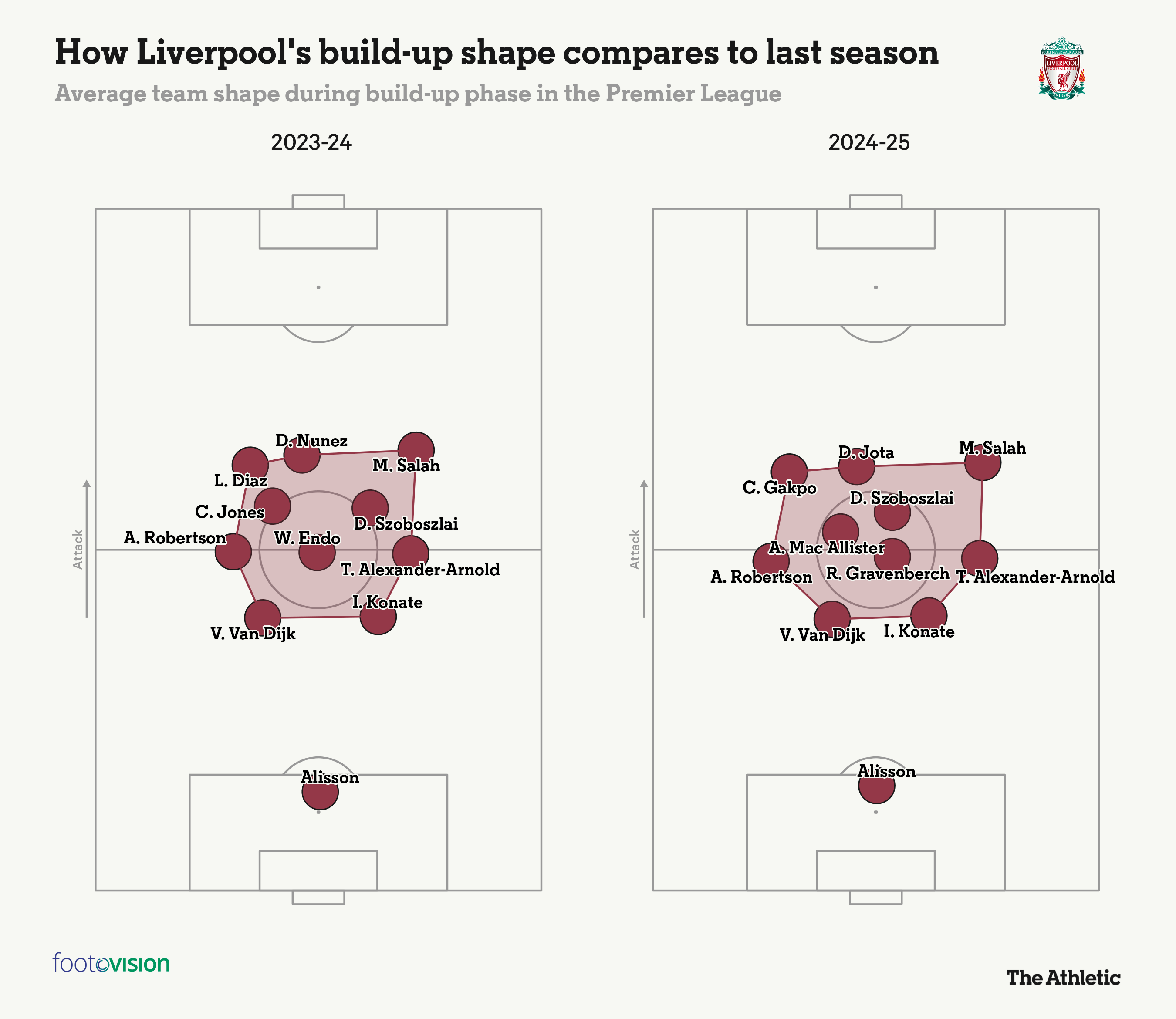
How did the coach who seemed to have all the answers last year become bereft of them this year? The popular thought is that he had a mature, experienced team, the members of which were quite familiar with each other and that team could be relied upon to function like a machine. In contrast, this season we’ve been starting a host of new players who don’t know the tendencies of each other as well and thus end up making passes to nowhere that would have had someone on the end of them last season. It’s hard to argue against that concept and if you’re a regular reader of Paul Tomkins’ newsletter, you’ll now be accused of not being a proper supporter if you don’t completely agree with it. But I don’t think it quite stops there. After all, we basically completely rebuilt the midfield in Jürgen Klopp’s last season and were still contending for the title before fatigue and injuries took us out of the running in March. This squad has basically been out of the PL title race since November, long before those same physical factors began to take their toll and hasn’t really been playing what anyone would call “good” football since the ‘24-’25 title was wrapped up last March. Somewhere along the way, we got found out and in over a year, Arne has found no significant way to respond to that.
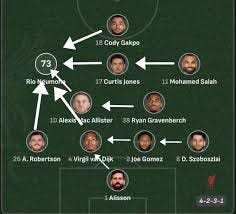
We nominally set up in a 4-2-3-1 with a double pivot, although said pivot has the usual situation where one tends to drift forward farther than the other and both often rotate with whomever is playing the 10 so that the difference between that formation and our typical 4-3-3 is often negligible. This is a continuation of the totaalvoetbal approach that Jürgen used, wherein everyone on the pitch should be able to stand in at any position and function at least moderately effectively. We see elements of that in Arne’s approach, but they seem to be more by default (X thing is happening so Y player is going to play this spot as the only one present) than by plan. The whole structure seems to be far more rigid than what Liverpool fans had become used to under Jürgen and that rigidity does not seem to be serving us when it comes to making effective attacks. What it does seem to result in is slow, plodding, passive football, which is a complete contrast to the philosophy of the previous manager, who emphasized aggression in all phases of the game, even if he did drift more toward a controlled passing game a la Guardiola in later years.
Style
Along with losing the second-most games in a Premier League season in the club’s history (12) and conceding the most losses in all competitions (20) and conceding the most goals in a league season since 1914 (52), the main thing that most at Anfield and across the Internet have been riled up about is that we’re doing all of that while playing boring football. Full confession: I was not a fan of Rafael Benitez’s time at the club because his style of football is awful. Yes, for a couple seasons of it we were winning many games, especially 2008-09 (sigh…) and doing well in cup competitions (Istanbul, reaching the final in Athens) because of the tenacious way we played, but the whole “sit deep and play the counter” approach is simply not for me and I think it wasted some of the prime years of Steven Gerrard’s career, during which he still demonstrated that he was one of the best midfielders in the game, which is another testament to his ability. We’re kinda reaching that point now except, you know, worse, since we have a team full of enormously talented players that all seem to be appearing to be less than what they were under the previous manager or at previous clubs. Certainly, there is some responsibility to be laid at the feet of said players and we’ll get to that but the overall look for most of this season isn’t a positive one for the coach.
Football at its root is entertainment and people, consequently, want to be entertained by what they’re watching. For the most part this season, that hasn’t been the case. Certainly, what the league has become also isn’t particularly thrilling, with the dependency on set pieces leading even the top teams to try to slow the game down into segments. But a sports science aphorism is that low event encounters tend to favor the side with less talent. In other words, if your team has lesser players than the opposition, you try to minimize events that could lead to scoring, since you won’t be as adept at it. If there are only three big chances in the game and you get one of them and can do a smash-and-grab for all three points, that’s the top result you could expect. If there are only four big chances and none of them are taken and you get away with a 0-0 draw, almost as good. If there are seven or eight big chances, then it’s more likely that the more talented team is going to succeed with more of them. So, low events leads to more success for the team that’s at a disadvantage. It also leads to ugly football and seems counter-intuitive for a side that has the significant talent advantage over most of its opponents (aka us.)
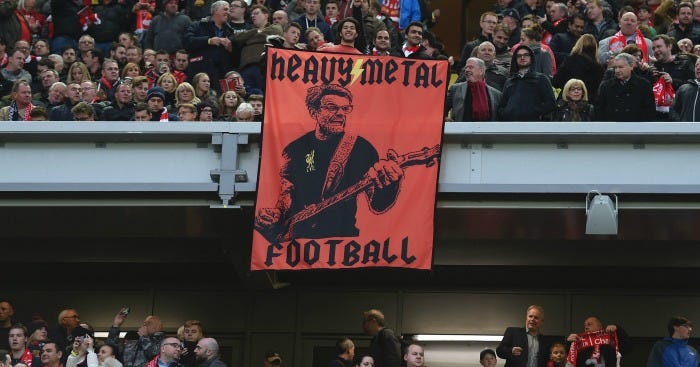
It’s inaccurate to say that Jürgen’s style was “all attack, all the time." It was that (“heavy metal football”) when he first arrived, but he gradually shifted to a more controlled passing game as the years went along. But what he didn’t shift away from was the pressing intensity. He retained his perspective that the best time to retrieve the ball was right after you lost it, so even if the build-up of our attacks was slower, the response to losing the ball was far more aggressive than what it is now. Arne changed that last season and I think it did contribute to some of our energy levels in second halves that allowed us to rescue some wins from games that otherwise wouldn’t have been. But the pace of play now, whether in build-up or when contesting control, whether on the ball or in the middle third or wherever, is glacial. We have no attacking impetus whatsoever, even when an Anfield crowd is shouting in frustration. There’s something that’s simply too methodical about Arne’s approach and/or what he’s asking this set of players to do is either not sinking in or is contrary to their instincts (see: Dominik Szoboszlai’s increasingly frequent saunters forward with the ball, ignoring both opponents and teammates.)
That’s an event that used to happen with some regularity by our wingers in frustrating games. When it’s being done by the guy who’s nominally playing the #10 role in this match, that’s typically a louder signal. You can see his frustration both at the end of this event and in attempts in prior matches. Said frustration can be based on a lot of things: circumstantial, the lack of impetus by his teammates and, yes, also as an objection to the type of football he’s being asked to play which isn’t producing results. There’s no way to conclude which, if any of those, is the dominant factor but the growing social media pushback by certain figures trends toward the latter.
Relationships
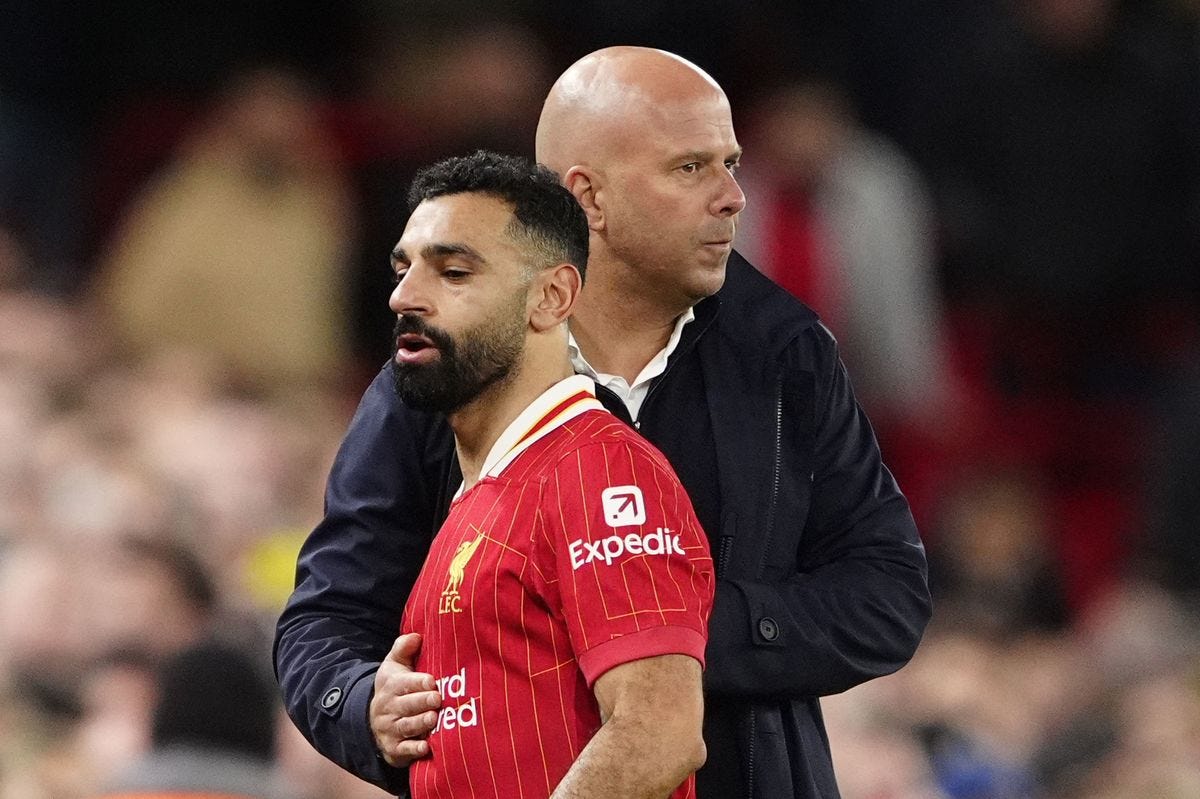
Arne Slot is a very different personality from Jürgen Klopp. Saying that sounds like a tautology because it couldn’t be more obvious. The latter was expansive, bombastic and emotional, both in his responses to the media and his interactions with his players. He was intensely loyal to them and functioned as much as a father figure to many of them as to a coach and manager. Arne is simply not that. His interactions with the media last season were quite candid and extremely refreshing on a professional level, but always with an understanding that he was giving away only information that he was comfortable providing. His relationships with his players seem to be similar. There’s a distance. He’s been that way with the whole community, as well. Where Jürgen and Ulla came to Liverpool and embraced the city (indeed, it’s long been rumored that Jürgen was ready to quit after 2023 and Ulla convinced him to stay by asking “How can we give up all of this?” (meaning the community)), Arne’s family still lives in the Netherlands and he visits them on weekends. First and foremost, given the nature of the club itself, I would suggest that a manager/coach that is part of the club who isn’t also interested in being part of the city is probably not the right person for Liverpool FC. Bill Shankly knew this. Bob Paisley knew this. So did Joe, the King, Roy, Gérard and even as restrained a person as Rafa. The club is the city and the city is the club. If you’re not willing to fully engage, then what are we doing here?
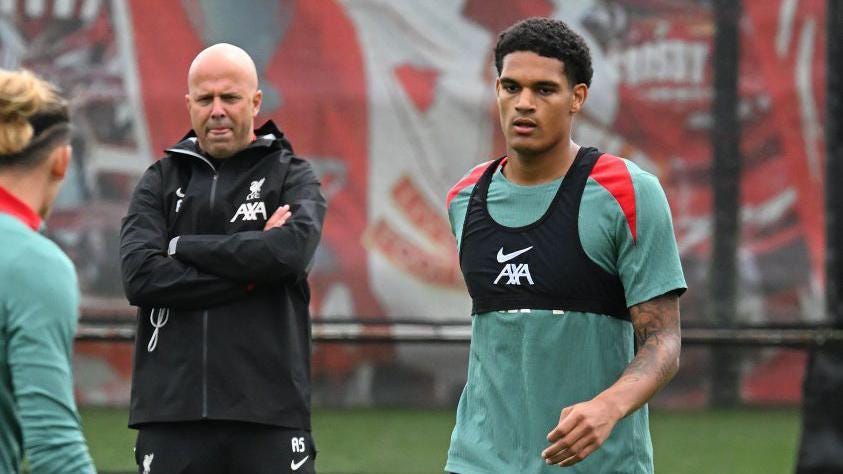
But it’s also a measure of how the coach interacts with his squad. Mo had his moments of dissent with Jürgen, as did Jordan Henderson, Trent Alexander-Arnold, Darwin Núñez, Sadio Mané and many others. But those were moments that were then left behind. There’s an obvious disaffection between Arne and various members of this squad, most notably Mo but also Curtis Jones, Andy Robertson and Hugo Ekitike that brings into question how good the working relationship within the dressing room as a whole is. If you aren’t enjoying your job, you’re never going to do your best work, obvsly. It’s an open question as to whether these are simply personalities that aren’t going to function well together at all or whether it’s something that can be modified. It obviously couldn't be modified in the cases of players like Jarell Quansah, who made no secret of how unhappy he was at being frozen out after one match last season, to the point where his most notable statement about life at Bayer Leverkusen is how he’s “loving football again.” Is that because of the coach, the opportunity to actually play, the style of play or some mixture of the three? Tyler Morton’s opinion at that same link is similar, also suggesting that “trust” issues with Arne seemed to be central. Anyone who’s seen the constant presence on our bench of seemingly capable players who are never used, leading to the first XI becoming exhausted, knows full well about said trust issues, which leads back to the previous argument about recruiting in that if we do have those players on the squad but the coach has decided they’re not good enough, again, what are we doing here?

The breakdown of our season has also led to a changing of Arne’s relationship with not only the media but also the fans. Certainly, when things aren’t going your way, interacting with others also perturbed about the circumstances is never going to be as good as it can be. But the string of excuses about the squad’s performance at every press conference has changed them from being one of the best parts about his tenure to one of the worst. It took several months for him to switch from casting blame on a myriad of other factors before finally settling on the fact that both he and the team were underperforming. Similarly, he shrugged off questions about style and performance in terms of supporter frustration until the moment he was booed off the field after the draw against Spurs. His mildly facetious response to that moment- saying that he was excited to come here because the fans always resolutely support the manager and how he must have done “a lot of things wrong” to garner this response -was also unhelpful. Before that moment, the collective frustration had been dismissed by a number of outlets as “Internet ‘supporters’” but now suddenly it was Anfield and that vocal response has carried over into multiple matches since then. In that respect, he was basically right: the fans will support you resolutely, until they’ve reached a point where there seems to be no hope. Once you’ve lost the Kop, you’ve lost and that seems to be where we are now, despite FSG’s assertions that they won’t be Chelsea (i.e. fire a manager a year after winning the title.)
In principle, I absolutely agree with that approach, because who wants to be Chelsea? Also because it seems odd to take one underperforming but not disastrous season (we seem on course to still make the Champions League) after another incredible one and decide that the latter was a fluke and this one isn’t. However, as noted, this level of performance and style of play and coaching habits have been going on for longer than just this season, so… But all of those involve players, too, which we’ll get to in part III.